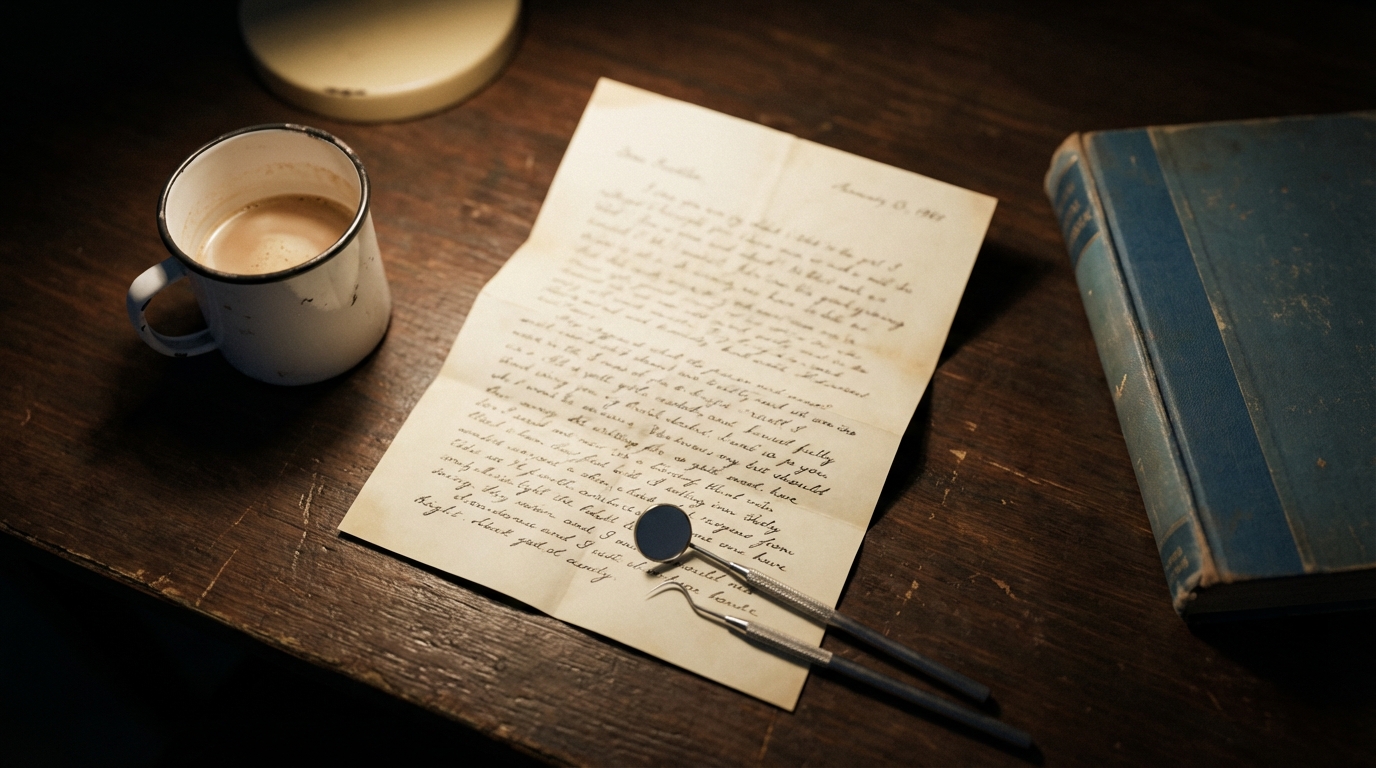
You are a dentist. You've treated patients, made clinical decisions, held someone's trust in your hands every single day. You earned that degree in your own country, in your own language, against your own odds. And that wasn't easy — you just don't remember it feeling this hard because you were younger, the system was familiar, and you had your people around you.
Now you're in a new country. Maybe working a job that has nothing to do with dentistry. Supporting a family. Adjusting to everything. And on top of all that, someone is asking you to prove — all over again — that you know what you already know. Whether that's the AFK, the INBDE, or the ADAT to get into a specialty program — the weight is the same.
I see you. And I want you to know — this letter is for you.
Across Reddit threads, WhatsApp groups, Facebook communities, DMs — everywhere I look, the same questions keep coming up:
- "What's the best way to study for the AFK?"
- "How many hours a day should I put in?"
- "Should I make notes or just do questions?"
- "Which books should I use for the ADAT?"
- "Is six months enough for the INBDE?"
I get it. You want someone to hand you the formula. A secret strategy. A study schedule you can screenshot and follow to guaranteed success.
There are no magic tips. And honestly? Chasing them is part of why so many people struggle.
So here's what I actually want to talk about.
The map is already in your hands
Here's something that blows my mind.
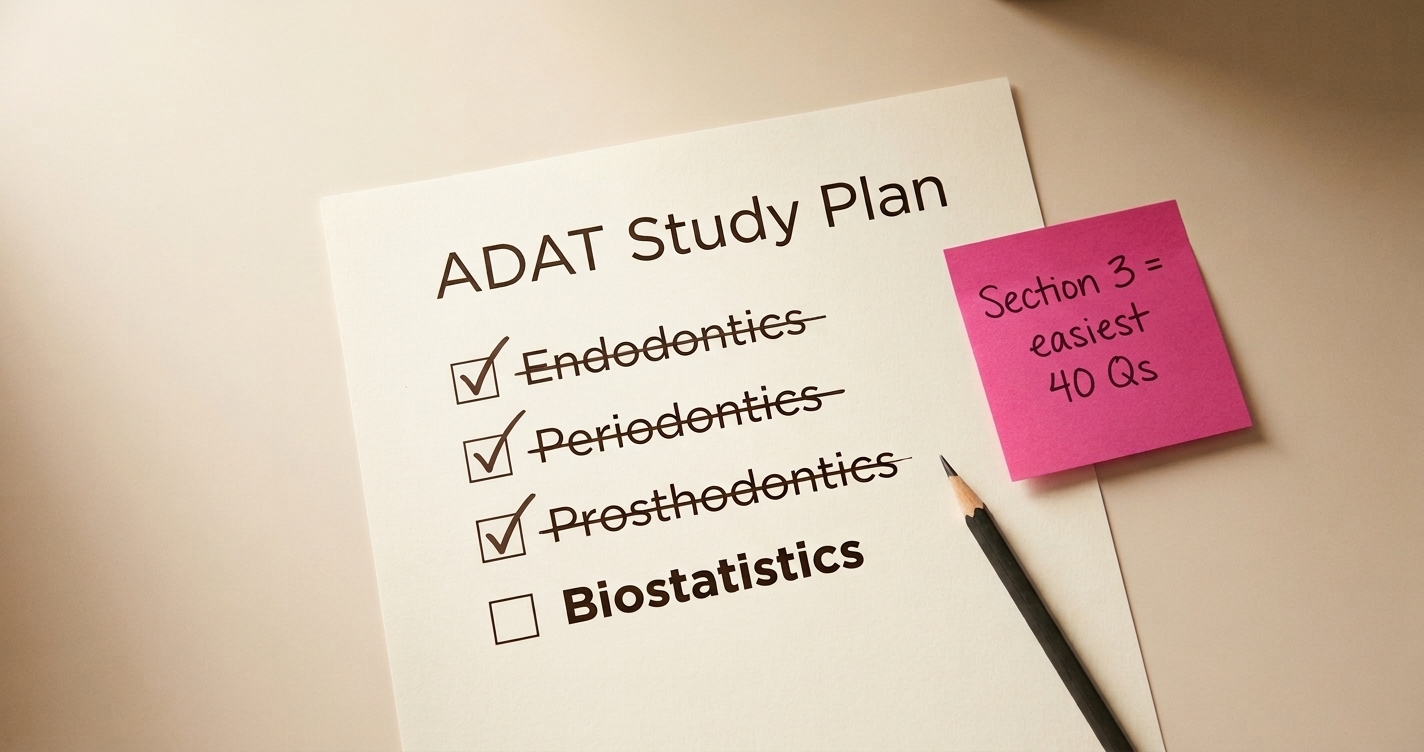
The NDEB publishes an AFK Protocol. The JCNDE publishes an INBDE Candidate Guide. The ADA publishes ADAT specifications. These aren't vague overviews. They're blueprints. The INBDE guide literally tells you: Oral Health Management is 42% of the exam. Diagnosis and Treatment Planning is 36%. Practice and Profession is 22%. They hand you the map, broken down by percentage, and say "here — this is what we're testing you on."
Most candidates I talk to have never opened these documents. Not skimmed them — never opened them.
Instead, they're asking strangers in WhatsApp groups what to study. The people who write the exam are telling you exactly what's on it — and you're asking someone who took it once, months ago, stressed out and sleep-deprived, what they vaguely remember being important.
The first-attempt pass rate for the AFK hovers around 33%. Two out of three candidates fail. And these aren't students — these are experienced dentists who practiced for years. They don't fail because they don't know dentistry. They fail because they studied the wrong things in the wrong proportions, or they prepared in a way that doesn't match how the exam actually works.
The fix is embarrassingly simple: download the official protocol or candidate guide, read it, and let it dictate your study plan. If pharmacology is 15% of the exam and orthodontics is 5%, your study time should reflect that. Not the other way around.
Stop crowdsourcing your syllabus. The exam body already wrote it for you.
Stop walking at someone else's pace
Have you ever watched a large group of people walking on a busy street? Everyone moves at the same pace. It's set by the few people at the front, and everyone else just... follows. Nobody questions it. Nobody thinks about whether that pace is too fast or too slow for them. They just match it because that's what everyone else is doing.
Only a handful of people break free and set their own pace. Most are happy to follow.
Don't be a follower in your exam prep.
I see this pattern constantly. Someone passes the AFK on their first attempt, posts their study schedule in the group, and suddenly fifty people are trying to replicate it step by step. Same books. Same hours. Same order.
Passing an exam is not a recipe you can copy from someone else's kitchen.
But here's the thing — your kitchen is different.
Maybe you graduated fifteen years ago and haven't thought about biochemistry since. Maybe English is your third language and you need more time processing clinical scenarios. Maybe you're strong in anatomy but can't remember drug interactions to save your life.
These aren't minor differences. They fundamentally change what you need to study, how long you need, and what approach will work. Someone else's perfect plan could be the exact wrong plan for you.
And here's what I've noticed about the people who actually pass: it has nothing to do with hours.
I know someone who studied four hours a day for nine months and passed on the first attempt. I know someone else who studied ten hours a day for six months and failed twice — because they never once stopped to figure out where their actual gaps were. They just kept grinding through the same material, the same way, hoping volume would save them.
It isn't about the hours. It's about knowing what to fix and fixing it.
The age of AI is here — stop pretending it isn't
I'm going to say something that might make a few people uncomfortable:
Not using AI for your exam prep in 2026 is like refusing to use Google in 2010.
You can do it. But you're handicapping yourself for no reason.
AI isn't here to replace your brain. It's here to make your brain faster. Think about what that looks like practically:
You're stuck on a pharmacology concept. The old version of you flips through a 900-page textbook for thirty minutes hoping to find a clear explanation. The new version asks AI to explain it in plain language. Thirty seconds. Done.
On Quizodontist, this is exactly what we built. Chat with AI about any concept you're struggling with. Ask it to generate mnemonics, create study notes in your style, or quiz you on your weak areas. It's not a shortcut — it's a multiplier. It takes the things that used to eat hours and compresses them to minutes, so you can spend those hours where they actually count: practice.
But — and this matters — AI is a tool, not a crutch. I've seen candidates who use AI to get answers instead of using it to understand concepts. Big difference. "What's the answer?" is the wrong question. "Why is this answer wrong and what am I not understanding?" is the right one.
The exam room doesn't have a chatbot. Make sure the knowledge lives in your head, not just in your chat history.
You don't have to do this alone
Nobody warned me about this part when I started working with ITDs: for most people, the loneliness is harder than the studying.
You come home from a survival job that has nothing to do with dentistry. You sit down with your textbooks at 9 PM. You study until midnight. You go to sleep. You do it again tomorrow. And nobody around you — not your coworkers, not your neighbors, sometimes not even your family — truly understands what you're going through. What it feels like to have been a respected professional in your country and now be starting from scratch.
That isolation breaks people. I've seen it happen. Candidates who knew their material, who were smart enough to pass, who just... burned out.
Not because the content beat them. Because the loneliness did.
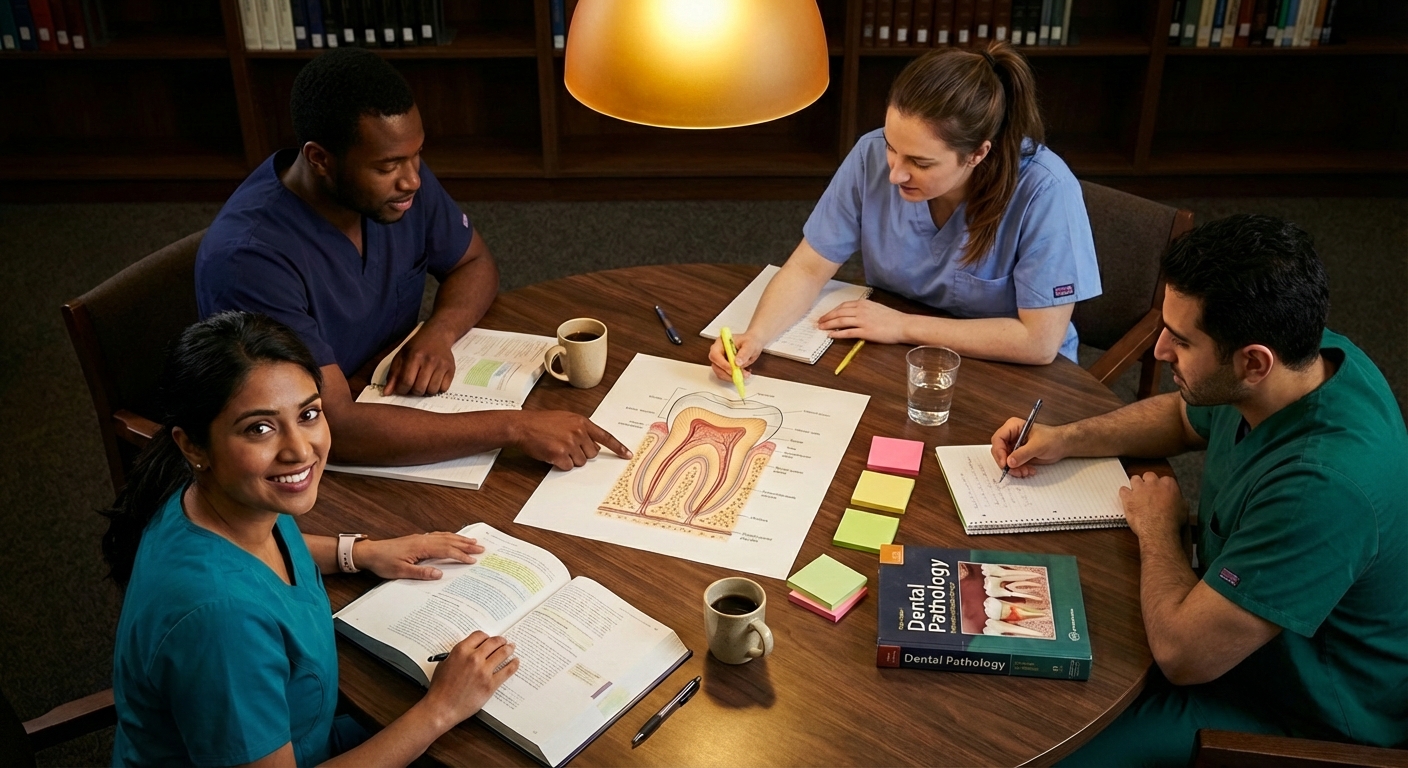
This is why I keep pushing people toward study groups, daily challenges, anything that puts them in a room (even a virtual one) with other people fighting the same fight. Not because it makes studying "fun." Exam prep is hard work, period. But there's a massive difference between grinding alone at midnight and grinding alongside someone who gets it. Who can explain that one concept you've been stuck on for a week in a way that finally clicks. Who can text you "keep going" on the days you want to quit.
Form a study group — even two or three people is enough. Challenge each other. Quiz each other. Hold each other accountable. On Quizodontist, we built daily challenges, study groups, and leaderboards for exactly this — because the candidates who stay consistent until test day are almost always the ones who aren't doing it alone.
There are hundreds of people on this journey right now. Find them. You'll sleep better on exam night knowing you're not in this alone.
Stop practicing football when you're assessed on cricket
This is the one that really gets me.
I've seen so many candidates planning to revise their notes eight, nine, ten times before the exam. They read through the same highlighted pages over and over, and with each pass they feel more confident. "I know this material. I've read it so many times. I'm ready."
They're not ready. Here's why.
The exam doesn't test whether you recognize information when you see it on a page. It tests whether you can recollect it from memory and apply it under pressure — across multiple subjects, against a clock, with no notes in front of you.
Reading your notes trains recognition. The exam tests retrieval. These are two completely different skills.
You're practicing football when you're going to be assessed on your cricketing skills.
And there's a cruel trick your brain plays on you. When you re-read notes, you feel like you know the material because it looks familiar. Psychologists call it the illusion of competence. You recognize it, so you think you know it. Then you sit for the exam and you can't produce the answer because you never actually practiced pulling it out of your memory.
Recognition and retrieval are not the same thing.
So what should you actually do?
Use your notes for initial learning — then close them and test yourself. Don't peek. The struggle to pull an answer out of your memory, even when you get it wrong, is where the real learning happens. That discomfort you feel when you can't remember? That's your brain building the retrieval pathway. Reading your notes again doesn't build that pathway. Only testing does.
The exam is objective. It doesn't care what you memorized — it cares what you can apply. You're not going to sit down and regurgitate a textbook chapter. You're going to face 200 MCQs that jump between subjects, demand clinical reasoning, and punish you for surface-level familiarity. The only way to prepare for that is to practice exactly that.
Do subject-wise quizzes to target your weak areas. Know you're shaky on pharmacology? Hit it with focused questions until it stops being shaky. Strong in anatomy? Use it to build momentum — flex on the topics you own, then channel that confidence into the ones you don't. On Quizodontist, you can build your own mock exams — pick the subjects, set the difficulty, simulate the real thing on your terms.
And here's something most candidates overlook: practice at the time your exam is scheduled. If your exam is at 9 AM, your brain needs to be in retrieval mode at 9 AM — not at midnight when you've been doing all your studying. Train your brain to recollect at will, on demand, during the hours that actually matter.
When you get a question wrong, don't just read the correct answer and move on. Figure out why you got it wrong. Every wrong answer is a diagnosis. Treat it like one.
This is harder than re-reading your notes. I know. That's exactly why it works.
So what now?
You came here looking for study tips. I gave you something harder — the truth.
The map is already in your hands. You just have to open it. The people who pass aren't the ones with the most hours logged or the prettiest notes. They're the ones who study with intention. Who are brutally honest about their weaknesses. Who do the hard thing — practice testing, active recall, timed simulations — instead of the comfortable thing, which is re-reading highlighted notes for the ninth time and calling it preparation.
They stop looking for someone else's formula. They build their own.
Here's what I want you to do this week — not next month, this week:
-
Download the blueprint. Go to the NDEB or JCNDE website. Download the official protocol or candidate guide. Read it. Actually read it. Make it your study map. This takes fifteen minutes and it will change how you approach everything.
-
Be honest with yourself. Where are YOUR gaps? Not the topics you don't enjoy — the topics where your knowledge is genuinely thin. Write them down. Nobody else needs to see this list. Then find your #1 score killer and go after it.
-
Close your notes and test yourself. Do a timed practice exam under real conditions this week. Not next week — this week. Feel the discomfort. That discomfort is the learning happening. On Quizodontist, you can build a custom mock exam targeting your weak subjects, or simulate a full-length test with the clock running. The point isn't to score well — it's to train your brain to retrieve under pressure.
-
Practice at exam time. If your exam is in the morning, practice in the morning. Your brain needs to be sharp when it counts — not at midnight when you've been doing all your studying.
-
Find your people. Join a study group. Text someone in the WhatsApp community. Stop grinding in isolation. It's harder alone and it doesn't have to be.
-
Use every advantage available to you. AI, community, active recall, targeted practice — these aren't gimmicks. They're the difference between preparing smart and just preparing long.
We built Quizodontist around every single problem in this letter — because we've watched too many good dentists fail for the wrong reasons.
I said it at the top and I'll say it again: you've already proven you're a dentist. You did it once. You can do it again. The system is different, the language might be different, the pressure is different — but you are the same person who earned that degree the first time. That person didn't need magic tips. That person put in the work.
Be that person again.
You've got this.